
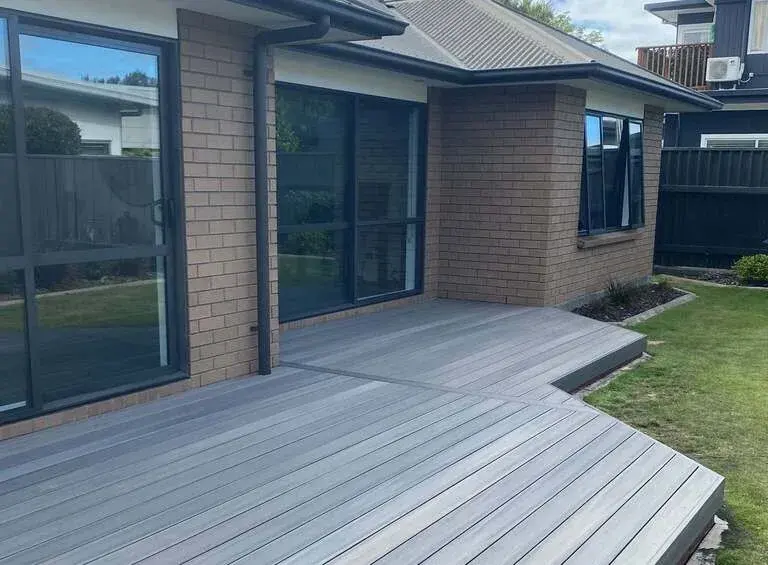
The short answer
Choose timber if you want the look and feel of real wood and a lower up-front cost, and you do not mind oiling or staining. Choose composite if you want the lowest-maintenance decking option and are happy to pay more at the start. Both are good decking options when the frame underneath is built properly.
| Timber (pine / kwila) | Composite | |
|---|---|---|
| Maintenance | Stain or oil every 1–2 years | Wash a couple of times a year |
| Look and feel | Real wood grain, natural variation | Consistent colour, manufactured look |
| Splinters | Possible as it ages, especially pine | None |
| Heat in full sun | Warm | Dark colours can get hot |
| Board lifespan | Pine 10–20 yrs maintained; kwila 25+ yrs | Often 20–25 yr manufacturer warranties |
For what moves the price of a deck, see the deck cost guide.
Cost now vs cost over time
Composite costs more on day one. Timber costs more each year after that: oil or stain, a weekend of your time or a professional to do it, and eventually replacing worn boards. Over 10 to 15 years, the gap narrows. If you plan to stay in the house and value your weekends, composite often makes sense. If you might sell in a few years, timber's lower up-front cost usually wins.
How long does composite decking last?
Good capped composite boards commonly carry 20 to 25 year manufacturer warranties against fading and staining. The timber frame underneath should last decades if it is ventilated and built properly. Cheaper uncapped boards can fade and stain sooner, which is why the board matters.
Is composite really maintenance-free decking?
Nearly. Composite never needs oiling, sanding or staining. But it is not quite maintenance-free: dirt, leaves and mildew can build up, especially in shady spots, so it needs a wash with warm soapy water a couple of times a year. Compared with timber, it is the lowest maintenance decking option available. See our deck care guide.
Choosing the best composite decking in NZ
Composite brands sold in NZ include Ekodeck, Modwood and Futurewood, among others. Rather than one brand being best, compare these:
- Capped or uncapped: a capped board has a protective outer shell that resists staining and fading. Most good boards are capped.
- Warranty: look at what it covers (fading, staining, structural) and for how long.
- Colour range: lighter colours stay cooler in sun.
- Fixing system: hidden clips give a clean surface; check what the system needs for joist spacing.
- Local availability: matching boards for a future extension is easier with a brand that is readily available in NZ.
Comparing two specific brands, like Modwood vs Ekodeck? Put their warranty documents and samples side by side and compare on the points above. We will talk you through options at the quote. More on our composite decking page, or see the best decking timbers in NZ if you are leaning timber.