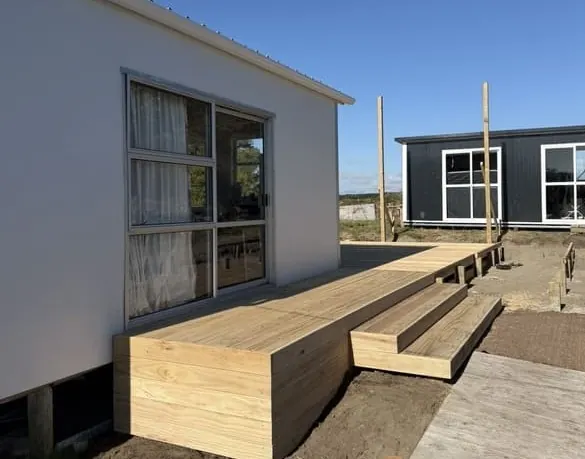


Timber Decking in Palmerston North: Kwila & Hardwood

  • Kwila, vitex, garapa and pine timber decks
  • Stainless or hot-dip galvanised fixings that won't stain
  • Built on H4 piles and H3.2 framing
  • Free on-site measure, written price within 48 hours

Get your free on-site quote

By clicking "Get Free Quote", you agree that your information will be shared with Rowdy Builders, to contact you regarding your quote request. See our Privacy Policy and Terms of Use.
We've got your message. We'll be in touch within the next few hours.
Oops! Something went wrong while submitting the form.
timber decking

Kwila decking and timber decks: the best-looking deck you can build

There is a reason kwila has been the go-to premium deck timber in New Zealand for decades. It is dense, hard-wearing and a deep red-brown colour that warms up a house like nothing else. A well-built kwila deck looks good on the day it is finished and better once it has had a summer or two.

Hardwood is the middle option on price, above treated pine and below most composites. It does need some looking after. Oil it once a year and it holds that rich colour. Leave it and it weathers to a silver-grey, which some people like and plenty of people choose on purpose.

We build hardwood decks across Palmerston North, from character homes in Hokowhitu where pine would look out of place, to new builds in Kelvin Grove and Aokautere where the owners want a natural timber deck rather than a manufactured board.
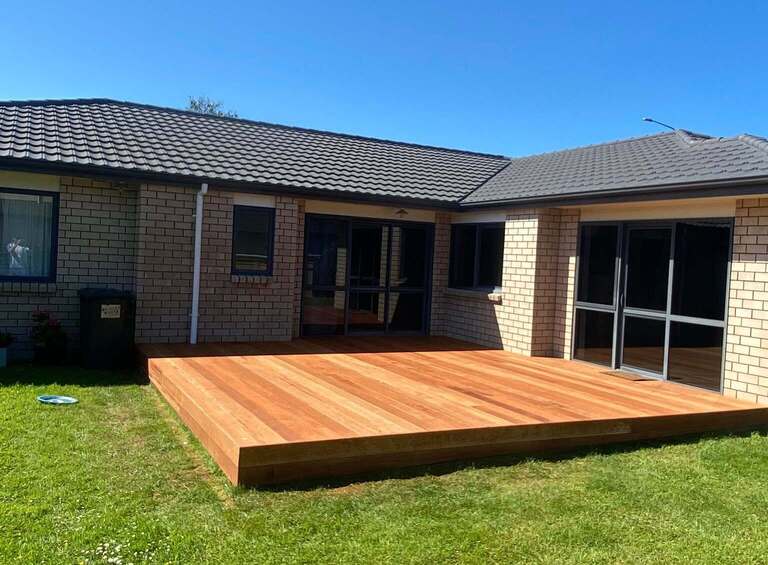
Timber deck built onto a brick home, Palmerston North
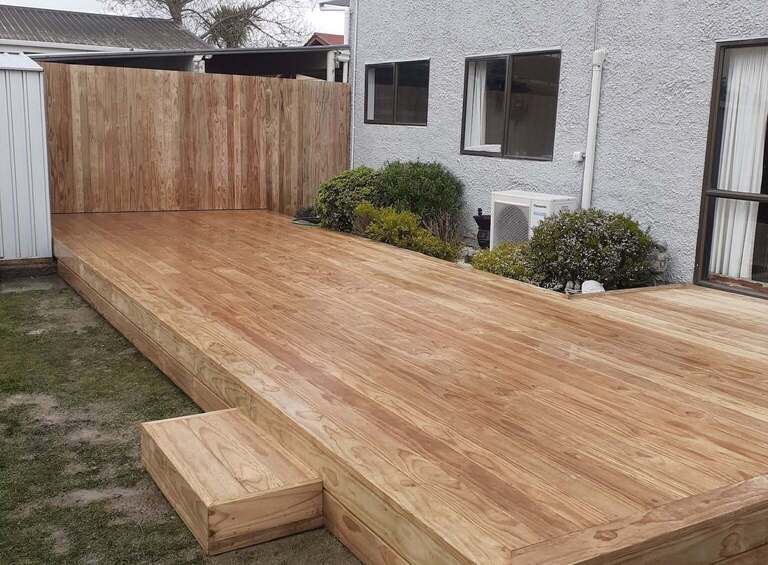
Timber deck with fence surround, Palmerston North
New timber deck with steps built beside a home in Palmerston North
wood decking options

Which timber decking? Kwila, vitex, garapa or pine

Wood decking in NZ, and hardwood decking in NZ in particular, mostly comes down to four timbers. As wood deck builders, we build wooden decks in NZ timbers and imports alike. All of them make a good timber deck when the frame underneath is built properly. They differ in looks, hardness, price and upkeep.

Kwila decking

The classic NZ hardwood deck. Deep red-brown, very hard and naturally durable. Bleeds tannin when new. The most popular hardwood decking in NZ and the one most people picture when they think of a timber deck.

Vitex decking

A lighter, golden-brown hardwood that is often cheaper than kwila. It weathers to silver-grey like other hardwoods, and generally bleeds less tannin than kwila. A good choice if you want a hardwood deck in a lighter colour.

Garapa decking

A pale, honey-coloured hardwood from South America. Hard-wearing with a fine grain. It suits modern homes where a red kwila tone would feel heavy.

Treated pine decking

Pressure treated pine decking (H3.2 radiata pine) is the most affordable timber decking in NZ, and pine decking in NZ and takes stain in any colour. Softer than hardwood, so it marks more easily. See treated pine decks.

For a full side-by-side comparison, including purpleheart, Accoya, Abodo and macrocarpa, read our guide to the best decking timber in NZ. If you are weighing timber against composite, see composite vs timber decking.

what to know

Kwila decking installation: building a hardwood deck properly

Tannin bleed, and how we deal with it

New kwila bleeds tannin, a red-brown stain, when it first gets wet. Left alone, it runs onto concrete, paving and weatherboards and it is hard to get off. We talk through where the water will run when we set out the deck, and we recommend washing the boards down before the first oil so most of the tannin is gone before it can mark anything. If your deck sits above a light-coloured patio, we will raise it before the build, not after.

Fixings that will not stain the timber

Hardwood reacts with plain steel and the screws leave black stains around every head. We use stainless steel or hot-dip galvanised fixings rated for the timber, and we pre-drill so the boards do not split at the ends.

Board gaps for drainage

Hardwood boards are laid with consistent gaps so water drains through and the boards can move a little with the seasons. Too tight and the deck holds water. Too wide and you lose things through it. We set the gap to suit the board and keep it consistent across the whole deck.

The substructure

H4 treated piles concreted in at the right depth, H3.2 bearers and joists at the centres the span calls for. A beautiful hardwood surface on a weak frame is wasted money, so this is where we spend the time.

Sustainable timber

Kwila is imported and its sourcing has a mixed history. Ask your supplier, or us, about certified or verified-legal timber if that matters to you. Other hardwoods, like vitex and garapa, are worth a look if you want the hardwood look with a different colour.

Get Free Quote →
looking after it

Keeping a hardwood deck looking good

  • Year one: wash the deck down a few times as the tannin leaches out, then apply a decking oil once it has weathered for a few weeks
  • Every year: wash, let it dry, and re-oil before summer if you want to keep the colour
  • Or leave it: unoiled hardwood greys off naturally and still lasts. It just changes colour
  • Keep it clear: sweep leaves and clear moss in shady corners, especially on decks under trees around Hokowhitu and the Esplanade end of town

Want the look of timber without the oiling? Have a look at composite decks. On a tighter budget? Treated pine is the most affordable way to get a big deck.

Get Free Quote →
pricing

What a kwila deck costs in Palmerston North

Hardwood board prices move around with supply, so this is a rough guide only:

DeckingIndicative installed priceExample: 20m² ground-level deck
H3.2 treated pine$300 – $550 per m²$6,000 – $11,000
Kwila & hardwood$450 – $850 per m²$9,000 – $17,000
Composite$550 – $1,000 per m²$11,000 – $20,000

These are indicative ranges only, not a quote. They are a rough guide based on typical New Zealand deck pricing, set deliberately wide. Height off the ground, ground conditions, access, board and fixing choice, stairs, balustrade, removal of an old deck and whether consent is needed all move the final number, sometimes a long way. The only price that counts is the fixed written price we give you after measuring up on site. Prices include GST.

See the full breakdown, including stairs, balustrades and raised decks, in our deck cost guide.

Get Free Quote →
FAQs

Timber decking: questions we get asked

Do you build wooden decks with vitex or garapa?

Yes. Kwila is the most common hardwood decking in NZ, but vitex and garapa are both good timber decking options, usually lighter in colour. We will talk through what is available when we quote.

How long does a kwila deck last?

A kwila deck on a properly built H4 and H3.2 frame can easily last 25 years or more. Hardwood is naturally durable, and the boards usually outlast cheaper timbers by a long way.

Will kwila stain my patio or house?

New kwila bleeds tannin when it gets wet. We plan for where the water runs and recommend washing the boards down before oiling, so most of the tannin is gone before it can mark paving or cladding.

Do I have to oil a hardwood deck?

No. Oiling once a year keeps the colour. Without oil the timber weathers to a silver-grey but stays sound. It is a look, not a failure.

Kwila or composite: which is better?

Kwila looks and feels like real timber and costs less up front. Composite costs more but needs almost no maintenance. We bring samples of both so you can decide on your own site.

What fixings do you use on hardwood?

Stainless steel or hot-dip galvanised screws rated for hardwood, with pre-drilled holes so the board ends do not split and the heads do not leave black stains.

Can you build a kwila deck on a sloping section?

Yes. Hardwood works on any height of deck. See our raised and sloping-site decks page for how we handle height, stairs and balustrades.

Get Free Quote →
keep reading

Other decks we build

Let's build a deck you're proud of

Free on-site quote. Fixed price in writing. Decks, fences and pergolas.

Get Free Quote →
Get Free Quote →
Tap To Call